A smart light pole may remain in the street for decades while cameras, routers, environmental sensors, displays, controllers, radios, chargers, applications, and cloud services change much faster. If the pole is accepted only because today’s devices turn on, the owner can inherit a long-lived steel asset tied to undocumented brackets, proprietary connectors, one management platform, one installer account, or firmware that cannot be supported after the original contract ends.
Municipalities, campuses, transport operators, industrial parks, developers, EPC contractors, and system integrators therefore need to define openness as a testable lifecycle result. The goal is not to force every device to use one protocol. The goal is to preserve safe replacement, documented data access, controlled software maintenance, supplier choice, and an orderly transition when a module or service reaches end of life.
This guide turns “open architecture” into procurement deliverables: a physical and electrical interface passport, a data/API contract, an asset and firmware register, cybersecurity responsibilities, a replacement demonstration, and a supplier exit test.
GEO Summary
- A smart light pole is open only when the owner can safely replace or add approved modules, access required operational data, administer identities, maintain firmware, and change service providers under documented conditions.
- Create an interface passport for every module position: mechanical envelope, mass, wind area, center of gravity, fasteners, power, protection, earthing, connector/pinout, network, heat, ingress, access, and structural limits.
- Separate the physical pole, field network, outdoor device network, central management software, departmental applications, and data platform. Name the owner, integrator, operator, and support party for each boundary.
- Specify APIs by use case, data model, version, authentication, authorization, event delivery, rate/volume limits, error behavior, test environment, documentation, export format, and support commitment. “API available” is not an acceptance criterion.
- Require unique device identity, removal of default/shared passwords, role-based access, certificate/key ownership, secure configuration backup, signed or authenticated updates, vulnerability handling, rollback or recovery, and end-of-support notice.
- Keep lighting, CCTV, public Wi-Fi, displays, sensors, EV charging, and management services in risk-assessed zones with explicit conduits. Sharing a pole does not require sharing one flat network.
- Prove openness with a replacement test and a documented export/import or supplier-exit test before final payment. Paper claims do not show that another authorized party can operate the system.
- Ask Henlyte for a project-specific pole and cabinet proposal using the service list, module loads, structural criteria, network boundaries, interface schedule, data ownership, support period, quantity, and handover tests.
The Short Answer: What Does Vendor-Neutral Mean?
Vendor-neutral does not mean that any random device can be connected without engineering. It means the procurement defines controlled interfaces and the owner retains enough rights, documentation, credentials, data, and test evidence to choose compatible replacements or service providers without replacing the entire asset unnecessarily.
A useful open-architecture requirement has four layers:
- Physical openness: replaceable modules have documented envelopes, attachment points, loads, access, cooling, sealing, and safe installation rules.
- Electrical and network openness: power, protection, earthing, connectors, pinouts, communication media, addressing, and approved protocols are controlled rather than implicit.
- Software and data openness: required functions and data are available through documented, versioned interfaces and exports under the owner’s contract.
- Operational openness: identities, configuration, firmware, logs, backups, support, security incidents, module changes, and supplier transition have assigned owners and tested procedures.
The Henlyte smart light pole category can establish the structural and product direction. The project schedule must then define the modules and interfaces that make the delivered pole maintainable.
Map the System Before Specifying the Pole
Start with a service and system-boundary diagram, not a shopping list. A smart pole may host lighting, CCTV, environmental sensing, Wi-Fi, 4G/5G equipment, public address, emergency intercom, traffic sensors, displays, EV charging, edge compute, and maintenance communications. These services can have different asset owners, privacy rules, power supplies, network operators, data retention periods, security requirements, and maintenance teams.
Map at least:
- the pole shaft, doors, base, foundation, brackets, internal rails, and external modules;
- utility or lighting feeder, always-on supply, metering, backup, and local distribution;
- lighting controller and luminaire interface;
- field switches, routers, gateways, radios, antennas, and carrier services;
- each sensor/actuator and its local controller;
- edge processor, local storage, and time source;
- outdoor device network and central management software;
- departmental applications such as CCTV video management, environmental dashboard, EV charging backend, and public-information platform;
- enterprise, cloud, maintenance, and third-party integration points;
- authoritative asset register, identity/certificate service, log destination, backup repository, and security-monitoring path.
For each boundary, identify who designs, supplies, configures, owns, operates, pays, patches, monitors, approves changes, responds to incidents, exports data, and removes the service. “By others” is not an interface owner.
Issue an Interface Passport for Every Module Position
Modularity is credible only when a replacement team can discover the constraints without reverse-engineering the installed pole. Give every module bay, bracket, rail position, cabinet zone, and external attachment an interface passport tied to controlled drawings.
| Interface field | Minimum project information | Why it matters |
|---|---|---|
| Mechanical | Envelope, mounting pattern, fastener grade/locking, orientation, tool clearance, lifting/removal method | Prevents a replacement that fits visually but cannot be installed, secured, or serviced |
| Structural | Mass, center of gravity, projected area, drag basis, eccentricity, dynamic/vibration input, allowed position | Preserves pole, bracket, foundation, and fatigue assumptions |
| Electrical | Voltage, frequency, phase/polarity, maximum/normal/inrush power, duty cycle, backup need | Keeps distribution, cable, battery/UPS, and thermal design valid |
| Protection | Breaker/fuse, isolation, surge protection, residual-current need, earthing/bonding, fault level | Defines safe coordination and service isolation |
| Connector | Manufacturer/series, mating part, pinout, keying, sealing, spare cap, mating cycles | Avoids undocumented proprietary plugs and unsafe field splices |
| Network | Medium, port, speed, PoE class where used, VLAN/zone, addressing, time, protocol, bandwidth | Makes the data path and capacity reviewable |
| Environmental | IP/IK target, temperature, humidity, salt/dust/UV, condensation, drainage, corrosion compatibility | Prevents a module from weakening the enclosure or failing in the site environment |
| Thermal | Heat dissipation, airflow path, surface-temperature limit, sensor location, derating | Avoids overheating inside a crowded sealed compartment |
| Access | Door/key/lock, safe working zone, service hours, traffic control, credentials, required competence | Connects physical maintenance with operational authorization |
| Documentation | Drawing, part/revision, certificate/test evidence, firmware, support owner, spare/lead time | Keeps the asset record usable after staff and suppliers change |
Reserve capacity explicitly. A percentage marked “future spare” is incomplete unless it says spare power, breaker ways, cable volume, structural allowance, wind area, data ports, bandwidth, thermal dissipation, module positions, and permitted access. Each future addition still needs change control.
Keep One Authoritative Asset and Configuration Record
A QR label is helpful only if it resolves to an owned, maintained record. The asset register should connect the physical pole to every replaceable hardware and software item.
Record:
- project, site, route, pole ID, coordinates, foundation and circuit;
- pole, door, bracket, rail, flange, anchor, and finish drawings/revisions;
- module manufacturer, model, serial, hardware revision, installation position, and asset owner;
- electrical circuit, protection, cable, connector, earthing, and metering details;
- network port, zone/VLAN, logical name, addressing method, and approved communications;
- firmware/software version, configuration revision, license/subscription, and support-end date;
- device identity, certificate/key owner, credential custodian, and rotation/expiry date without storing secrets in the open register;
- data owner, data classes, retention, destination, and permitted consumers;
- privacy/security assessment references;
- installation, commissioning, calibration, maintenance, fault, replacement, and vulnerability history;
- approved spares, compatible alternatives, special tools, and recovery files.
Use version control or equivalent change history. When a module is replaced, preserve the removed identity, new identity, reason, work order, configuration source, test result, data continuity decision, and warranty disposition.
Turn “Open API” Into a Contract
An API can exist and still be commercially or technically unusable. It may expose only a dashboard subset, require a paid tier not included in the offer, change without notice, omit historical data, throttle exports, or depend on supplier-controlled credentials.
Specify each integration use case:
- read current status, alarms, energy, sensor values, and device health;
- retrieve historical time-series and event history;
- create or update approved schedules and setpoints;
- acknowledge or route alarms;
- synchronize the asset register;
- send events to maintenance, security, or city platforms;
- export configurations and audit records;
- manage users, roles, devices, and certificates where contractually permitted;
- obtain service status and platform health.
For every use case, define:
- API/protocol name, edition/version, and conformance or certification evidence;
- endpoint and data model documentation;
- object IDs and mapping to physical asset IDs;
- supported operations and fields, including units, timestamps, quality flags, and null behavior;
- authentication and authorization method;
- certificate, key, token, and secret ownership/rotation;
- transport security and allowed network path;
- pagination, filtering, bulk export, event/webhook, and retry behavior;
- rate, concurrency, payload, and retention limits;
- error codes, idempotency behavior, and audit logging;
- development/test environment and sample data;
- backward compatibility, deprecation notice, and change process;
- availability, support hours, incident communication, and recovery objectives;
- license, subscription, egress, and third-party integration costs;
- acceptance tests and ongoing regression tests.
The TALQ Smart City Protocol is one example of an application-layer approach for managing outdoor device networks through an open, RESTful API/data model. A tender should cite the exact required version, functions, profiles, and certification or test evidence rather than using “TALQ” as an undefined marketing label.
Define Data Ownership, Custody, and Exit Formats
The contract should separate ownership, stewardship, hosting, processing rights, intellectual property, confidentiality, and access. Saying “the city owns its data” does not answer how quickly the city can export it, which derived data is included, or what happens at contract termination.
Create a data schedule for:
- asset/configuration data;
- lighting commands, status, energy, and fault history;
- environmental and traffic measurements;
- device/network/edge health and logs;
- CCTV or audio metadata and content where applicable;
- EV charging transactions and payment-related boundaries;
- user, role, access, and audit records;
- maintenance work orders and warranty history;
- analytics, models, thresholds, and derived indicators;
- security events, vulnerability status, and update records.
For each class, define the authoritative system, data owner, processor/custodian, purpose, lawful/privacy basis where applicable, retention, geographic/hosting requirement, backup, encryption, consumers, export format, export frequency, deletion rule, and evidence of deletion at exit.
Require a full export before acceptance and at regular intervals. CSV or JSON can be useful for tabular and event data; images, video, configurations, certificates, drawings, and logs need appropriate documented formats. Include schemas, units, enumerations, relationships, and checksums so an export is more than a folder of unexplained files.
Control Device Identity, Credentials, and Remote Access
Smart poles create many small administrative boundaries. Shared default passwords, supplier-only superuser accounts, unknown cellular management portals, and permanent remote support tunnels can defeat an otherwise strong network design.
Require:
- unique device identity and unique administrative credentials or certificates;
- removal or controlled rotation of defaults before connection to the production network;
- role-based access and least privilege;
- named administrator, operator, maintainer, auditor, and emergency roles;
- multifactor authentication where the selected systems support and require it;
- owner-controlled recovery and break-glass procedure;
- inventory of local, cloud, carrier, API, and service accounts;
- certificate/key issuance, storage, rotation, revocation, expiry monitoring, and transfer;
- remote-access approval, time limit, source restriction, encryption, session logging, and termination;
- failed-login, privilege-change, configuration-change, and export audit records;
- offboarding for supplier and employee accounts;
- proof that local safe lighting operation survives loss of remote access or the cloud.
Never place passwords, private keys, recovery codes, or bearer tokens in an open handover document. Hand over secrets through an approved secure channel and document only their owner, location class, status, and lifecycle.
Make Firmware Support and Vulnerability Handling Measurable
Connected modules may need security and reliability updates long before the pole reaches end of life. The tender should ask both what the device can do and how the supplier manages it.
The schedule should include:
- current firmware/software version and secure configuration baseline;
- support start, minimum support period, and published end-of-support process;
- vulnerability disclosure contact and acknowledgement/triage targets;
- security-advisory and customer-notification method;
- component inventory or software bill of materials where required by project policy;
- update authenticity/integrity verification and authorization;
- staged deployment, test group, maintenance window, and rollback or recovery;
- behavior if power or communication fails during update;
- preservation or migration of configuration and certificates;
- compatibility matrix across devices, gateways, APIs, and management software;
- critical-fix process and risk-based exception approval;
- update log, version evidence, success/failure status, and fleet coverage;
- final supported version and transition plan before end of support.
NIST’s IoT device cybersecurity baseline describes device capabilities as a starting point for organizations acquiring or integrating IoT equipment, while NIST SP 800-82 addresses operational-technology security with reliability and safety considerations. ISA/IEC 62443 provides lifecycle and shared-responsibility concepts for asset owners, integrators, product suppliers, and service providers. The purchaser should select requirements from its risk assessment and applicable policy rather than claim automatic compliance from one checklist.
Segment Services Even When They Share One Pole
A multifunction pole can share steelwork and civil space without placing public Wi-Fi users, cameras, lighting controllers, displays, sensors, chargers, and maintenance ports on one flat network. Define risk-based zones and explicitly permitted conduits.
The network schedule can identify:
- lighting control zone;
- video/public-safety zone;
- public-access Wi-Fi zone;
- environmental/traffic sensor zone;
- EV charging and payment boundary;
- display/content-management zone;
- field-management zone;
- device onboarding/quarantine zone;
- enterprise or city-platform integration zone;
- vendor remote-support path;
- local service port and its disabled/default state.
For each conduit, document source, destination, protocol/port, direction, authentication, encryption, expected volume, availability need, logging, monitoring owner, and change approval. Block unspecified paths by policy where the architecture supports it.
Also define offline behavior. Loss of the backhaul should not create an unsafe dark road, uncontrolled display, failed emergency function, or unrecoverable device. State which schedules/configurations remain local, how long data buffers, how alarms are indicated, and how the system reconciles after reconnection.
Prove Modularity With a Replacement Test
A catalogue claim that modules are “plug and play” does not prove lifecycle replacement. Before fleet acceptance, select one representative approved module type and demonstrate a controlled replacement by an authorized maintenance team.
Record:
- Safe isolation, access, traffic control, and identity verification.
- Removal without damage to seals, earth bonds, adjacent cables, brackets, or data.
- Verification of the replacement part and interface passport.
- Mechanical installation, torque/locking, sealing, bonding, cable routing, and environmental closure.
- Device onboarding, identity/certificate issue, network-zone assignment, and least-privilege role.
- Configuration restore or controlled parameter entry.
- Functional, communication, alarm, time, data, and cybersecurity checks.
- Asset-register update and removed-device revocation.
- Evidence that historical data remains correctly associated and the new device starts a traceable record.
- Restoration of normal service and closure of the work order.
If a “compatible” alternative changes mass, projected area, heat, power, connector, protocol, firmware, data model, privacy behavior, or support responsibility, route it through engineering and security change control. Modularity is not permission to bypass design review.
Include a Supplier Exit Test Before Final Payment
The strongest anti-lock-in requirement is an executable exit test. Run it while the original supplier is still contractually available.
A representative exit test can require the owner or designated third party to:
- obtain the complete current asset/configuration export;
- verify schemas, units, relationships, timestamps, checksums, and documentation;
- create owner-controlled administrative accounts and recover access;
- rotate or replace a selected credential/certificate under the approved process;
- retrieve historical data and alarms through the documented API;
- reproduce a required dashboard or report from exported/API data;
- back up and restore a representative configuration;
- disable a supplier remote-access account without interrupting local safe operation;
- import or map selected data into an agreed receiving system;
- confirm software, firmware, licenses, certificates, drawings, and tools included in the handover;
- produce the final list of supplier-owned dependencies and their termination effects;
- demonstrate secure deletion or return of owner data at a test environment or contract milestone;
- measure the time, effort, cost, and exceptions.
Define pass/fail criteria, remediation, retest, and final-payment holdback. If the receiving platform is not yet selected, use a neutral export validation and owner-controlled test client rather than leaving the requirement untested.
Align Support Life With the Pole Investment
The pole, foundation, network equipment, sensors, and cloud service do not share one life. Build a lifecycle matrix.
| Asset or service | Required lifecycle decision |
|---|---|
| Pole and foundation | Structural design life, inspection, corrosion repair, change-load limits, drawing retention |
| Doors, rails, brackets, connectors | Spare availability, interface control, replacement tools, sealing/bonding procedure |
| Luminaire and driver | Photometric/configuration traceability, approved service parts, control compatibility |
| Cameras, sensors, routers, gateways | Support term, firmware process, calibration, replacement and onboarding |
| Edge compute/storage | Capacity, data protection, patching, backup, secure wipe, replacement |
| Central management software | Subscription, availability, API/version support, data export, disaster recovery, exit |
| Carrier/cloud/third-party service | Contract owner, renewal, coverage, credentials, outage behavior, termination |
| Certificates and domains | Registrar/issuer owner, expiry monitoring, renewal, revocation, transfer |
Do not accept a 20- or 30-year “smart pole life” claim when critical modules have no documented five-year support path. State how short-life components are replaced without invalidating the long-life structural asset.
Factory, Site, and Handover Tests
The factory integration test should verify the offered configuration before shipment:
- controlled drawings, schedules, software/firmware, and serial numbers;
- physical fit, access, door operation, cable routing, labels, bonding, and sealing;
- power distribution, isolation, protection, inrush, backup, and thermal behavior under the agreed load;
- network zoning, addressing, time synchronization, and communication paths;
- device onboarding, roles, alarms, configuration, local fallback, and restart;
- API use cases, export, audit log, backup, and representative restore;
- update or approved update simulation and recovery evidence;
- replacement test on an agreed module;
- data/privacy masking or disabled test inputs where live data is unnecessary.
Site acceptance should add foundation/pole orientation, feeder/earthing, carrier/backhaul, radio coverage, device view/aim, sensor calibration, lighting result, environmental closure, end-to-end applications, privacy signage/masking where applicable, real asset IDs, monitoring, and failure/recovery tests.
Handover closes the drawings, register, interface passports, configurations, credentials/certificates through secure transfer, source/licensing obligations, API documentation, exports, training, support contacts, vulnerability process, spares, special tools, backups, exit test, and open exceptions.
Smart Light Pole RFQ Checklist
- Site/application, service list, use cases, departmental owners, and privacy/security classification
- Pole height, material/finish, wind/environment, foundation, doors, compartments, access, and structural design life
- Module mass, projected area, eccentricity, dynamic input, position, envelope, mounting, and future allowance
- Power source, always-on/lighting circuits, normal/inrush load, backup, metering, isolation, protection, earthing, and surge coordination
- Connector series/pinout, cable, ports, bandwidth, time, zones, conduits, protocols, and offline behavior
- Outdoor device network, central management software, departmental platforms, cloud/carrier services, and system integrator
- API use cases, version, data model, authentication, limits, test environment, change notice, support, and total cost
- Data owner/custodian, retention, hosting, consumers, backup, export formats, deletion, and exit
- Device identity, role model, credentials/certificates, remote access, audit logs, vulnerability handling, firmware support, and end-of-support notice
- Asset register, configuration baseline, interface passports, compatibility matrix, spares, tools, and training
- Factory integration, site acceptance, replacement demonstration, backup/restore, and supplier exit test
- Quantity, project schedule, destination, certifications, inspection/witness points, warranty, support term, and final-payment conditions
Common Open-Architecture Red Flags
- “Open” means only that the enclosure has spare space.
- A proprietary connector has no mating-part number, pinout, spare cap, or transfer right.
- Future module capacity ignores mass, wind area, power, heat, bandwidth, and structural position.
- The API is a paid option discovered after award, with no version commitment or bulk export.
- Only a supplier superuser can add devices, issue certificates, or recover the system.
- All services share one switch and subnet because they share one pole.
- Remote support is permanent, unlogged, or cannot be disabled by the owner.
- Firmware can be updated but authenticity, rollback, fleet status, and support end are undefined.
- Device serial numbers do not map to pole IDs and management-platform objects.
- Historical data cannot be exported with units, timestamps, quality flags, and schemas.
- Replacing a sensor requires the original vendor to edit a hidden database.
- The supplier promises a long pole life but gives no module, software, license, or certificate lifecycle.
- Exit obligations begin only after termination, when the supplier has no remaining payment milestone.
Image Suggestions
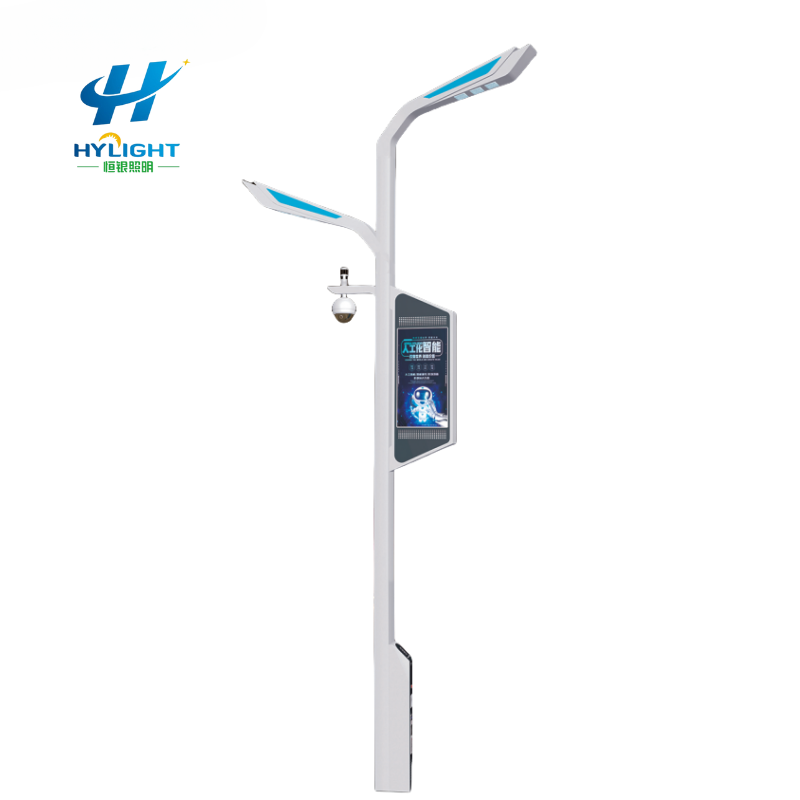
Use the existing Henlyte smart light pole image as the featured image with the alt text “smart light pole open architecture with modular interfaces, APIs, firmware support, and supplier exit testing.” Add an original layered diagram showing pole/module interfaces, segmented service networks, the outdoor device network, central management software, departmental applications, and owner-controlled asset/data systems.
A second original graphic can be an interface passport card with mechanical, structural, electrical, connector, network, environmental, firmware, support, and data fields. A third can show the exit-test sequence from export and credential transfer through API validation, backup/restore, remote-access removal, and receiving-system import. Do not use competitor product drawings or imply that one module interface is universal.
FAQ
What makes a smart light pole vendor-neutral?
The owner can use documented and controlled physical, electrical, network, software, data, security, and support interfaces to replace approved modules or service providers. The owner also has the necessary rights, credentials, exports, documentation, and tested transition procedure.
Does an open API automatically prevent vendor lock-in?
No. The API must expose the required use cases and data, remain documented and versioned, use owner-accessible authentication, include workable limits and support, and be tested. Licenses, data egress, device onboarding, certificates, and configuration backups can still create lock-in.
Can any camera or sensor be installed in a modular smart pole?
No. A proposed module must fit the interface passport and the approved structural, power, protection, thermal, environmental, network, privacy, cybersecurity, and maintenance design. A change in mass, wind area, heat, connector, protocol, or data handling needs review.
What cybersecurity documents should be handed over?
Request the asset/configuration register, network and data-flow diagrams, role/account matrix, certificate/key responsibility, secure baseline, firmware/update records, vulnerability contact and process, remote-access procedure, logs, backup/recovery instructions, support dates, and open-risk register. Transfer secrets separately through a secure channel.
What is a smart pole supplier exit test?
It is a witnessed exercise proving that the owner or designated third party can export and understand data, obtain administrative control, rotate selected identities, use required APIs, back up/restore configuration, remove supplier access, and move agreed information to a receiving system.
When should the exit test be performed?
Define it in the tender and run a representative test before final acceptance or final payment, while the supplier is still obligated to correct gaps. Repeat or refresh the export and transition evidence at major upgrades, renewals, and before contract termination.
Inquiry CTA
Planning a smart-city corridor, transport hub, campus, industrial park, commercial district, port, or mixed-use development? Send Henlyte the pole locations, service list, module schedule, mass/wind-area and power data, environmental criteria, network diagram, system owners, API/data requirements, security policy, support period, quantity, destination, and FAT/SAT/exit-test expectations.
Use the Henlyte project inquiry form and include “smart light pole open architecture.” The team can review the smart light pole range, a representative integrated Wi-Fi, camera, display, and charging-pile pole, related LED street lights, the broader light pole range, and your project-specific interface and handover schedule as one coordinated offer.